On 9 February 2021, a spacecraft built in the United Arab Emirates arrived at Mars. It was the country’s first interplanetary mission, and it made the UAE one of a small number of countries to have placed a probe in orbit around another planet. Looking at how the mission was planned and flown shows what such projects involve.
What was the Emirates Mars Mission?
The Emirates Mars Mission, with a probe called Hope, or Al-Amal in Arabic, was run by the Mohammed bin Rashid Space Centre in Dubai. According to the mission’s website, mission operations were based at the centre, with communications to the spacecraft supported by the Deep Space Network, the international system of large antennas that tracks and communicates with distant probes. Scientific partners in the United States contributed to the design and the instruments, according to published descriptions of the mission.
The goal was not to land on Mars but to study its atmosphere. Hope was designed to build a picture of the weather and climate of the planet through the seasons, and to examine how gases escape from its upper atmosphere into space.
When and where did it launch?
The probe was launched on a Mitsubishi H-IIA rocket from the Tanegashima Space Center in Japan. The mission’s own pages and reports describe the lift-off as taking place at 1:58 a.m. Japan time on 20 July 2020, which was 19 July in universal time, at about 21:58. The date is therefore given as 19 or 20 July depending on the time zone. The launch had been scheduled for 15 July and was delayed by unstable weather, and the date of 20 July was the third launch date set.
Launching from Japan was a practical choice, because the mission used an existing, proven rocket and launch site that could place the probe on the right path toward Mars during the launch window, an opportunity that occurs roughly every 26 months when the planets are favourably aligned.
How long did the journey take?
The probe travelled for about seven months. It did not fly in a straight line but followed a long curved path through space, timed so that it would meet Mars as the planet moved along its own orbit. The mission’s records give the arrival date as 9 February 2021. Along the way, the operations team made trajectory corrections with small engine burns, and monitored the health of the spacecraft.
What happened at Mars orbit insertion?
The most dangerous moment was the manoeuvre that slowed the probe so that Mars’ gravity could capture it. The mission describes this as Mars Orbit Insertion, a process that was carried out entirely autonomously by the spacecraft, because the delay in radio signals between Mars and Earth made direct control impossible. The probe had to fire its engines for a long period, and the mission says that nearly half of the fuel on board was spent in slowing the probe enough to be captured.
During the burn, the spacecraft passed behind Mars as seen from Earth, so contact was lost. Controllers could only confirm success when the probe reappeared and sent a signal. That moment of waiting is typical of orbit insertions, where the result is known only after the event. If the engine had failed or shut down early, the probe would have flown past the planet.
What does Hope study?
Hope carries three instruments, as described by the mission: a camera that takes images, an infrared spectrometer and an ultraviolet spectrometer. Together they measure temperature, dust, ice clouds, water vapour and the behaviour of hydrogen and oxygen in the upper atmosphere. Because of its orbit, which is high and elliptical, it can observe the whole planet over several days and watch how conditions change through the day and the seasons. This is different from other missions, which view the planet at a fixed time of day, and it provides complementary data.
The data are made available to scientists around the world, and an agreement between NASA and the Emirates mission to share science data has been announced, as NASA has described.
How do you steer a spacecraft over such distances?
Navigation relies on tracking. Antennas on Earth send signals to the probe and measure the time they take to return and the shift in their frequency, which allows controllers to calculate the probe’s distance and speed to great precision. The resulting trajectory is compared with the plan, and small engine firings correct any difference. Because radio signals travel at the speed of light, the delay between Earth and Mars varies from a few minutes to more than twenty, depending on where the planets are in their orbits. This is why commands are prepared in advance and sent in batches, and why critical manoeuvres must be automatic.
The spacecraft also has to manage heat, power and communications on its own: it uses solar panels for electricity, points its antenna at Earth and keeps its instruments within safe temperatures while moving through very different conditions, from the Sun’s glare to the cold of space.
What happened after arrival?
After insertion, the probe moved into its science orbit, and the team began to collect data. The mission’s pages describe a plan to observe Mars through a full Martian year, which lasts about 687 Earth days, to capture seasonal changes. Data are processed by the science team and released to the public in stages, so that researchers worldwide can use them. As with other missions, operations are extended as long as the spacecraft remains healthy and the science is valuable.
Why did the UAE undertake the mission?
Government statements around the mission described several aims: to develop scientific and engineering skills in the country, to inspire young people and to contribute to knowledge of Mars. The project was also a way to build a space sector, with local engineers working alongside international partners and learning the craft of spacecraft design, testing and operations.
This fits a wider pattern in Gulf economic strategies of investing in advanced technology as part of diversification, a topic discussed in how Gulf economies are diversifying beyond oil. It was also an example of the federation’s emirate-level institutions, here in Dubai, taking a lead on a national project, as explained in how the United Arab Emirates is governed.
What does the mission show about the technology?
Three lessons stand out. First, planning around launch windows is rigid: if the opportunity is missed, the next comes more than two years later. Second, autonomy is essential at planetary distances, so spacecraft must be able to carry out critical operations without instructions. Third, ground infrastructure, such as the Deep Space Network, is as important as the spacecraft itself.
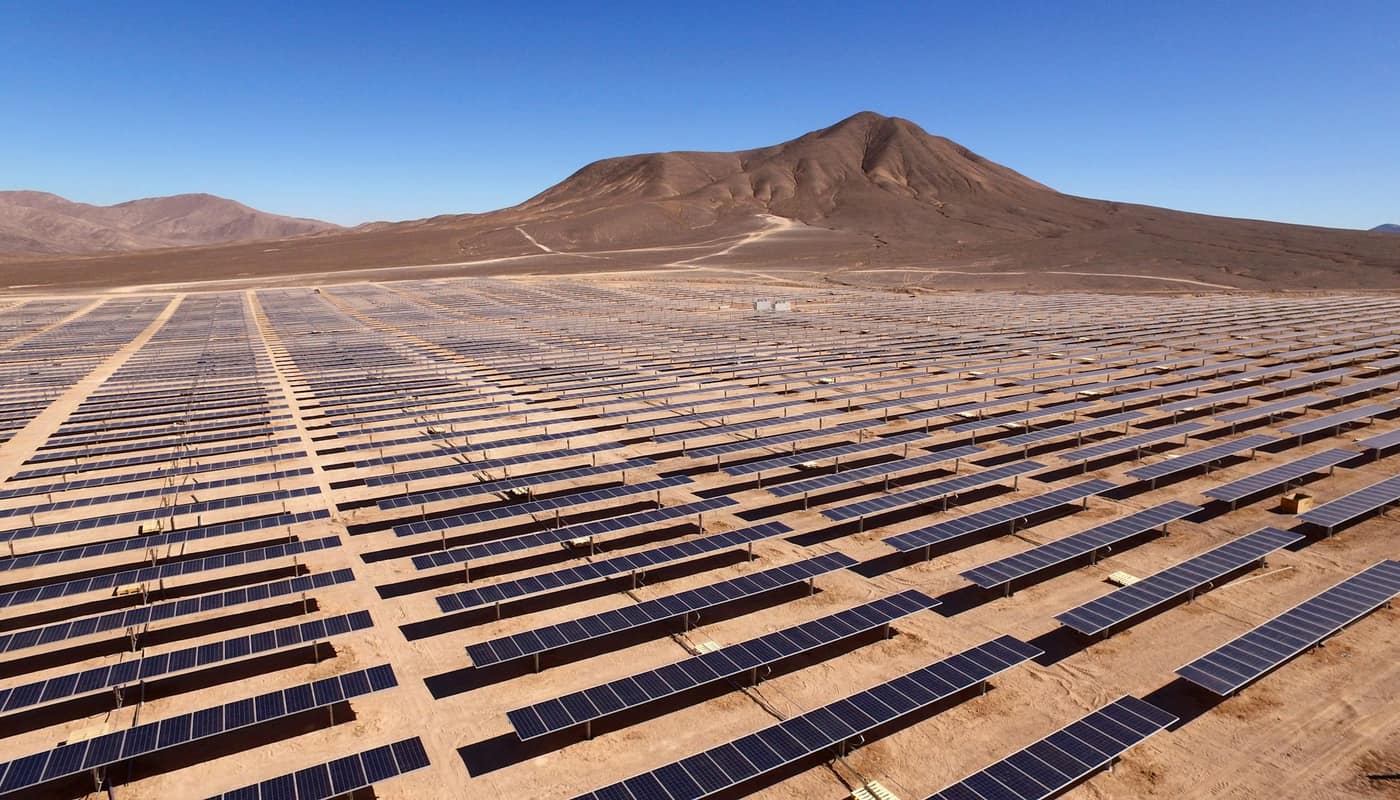
For readers interested in how other technologies are changing the Gulf, the energy sector offers another case, described in how large solar farms work in the Gulf.
What should readers keep in mind?
Dates and times for space missions can vary by time zone, as the launch date shows. Mission websites and space agencies publish the authoritative data, and scientific results are released in journals and data archives over time. Because the mission is long-running, its findings continue to be updated, and readers who want current results should check the mission’s official pages.
Sources: Emirates Mars Mission; NASA Jet Propulsion Laboratory; NASA