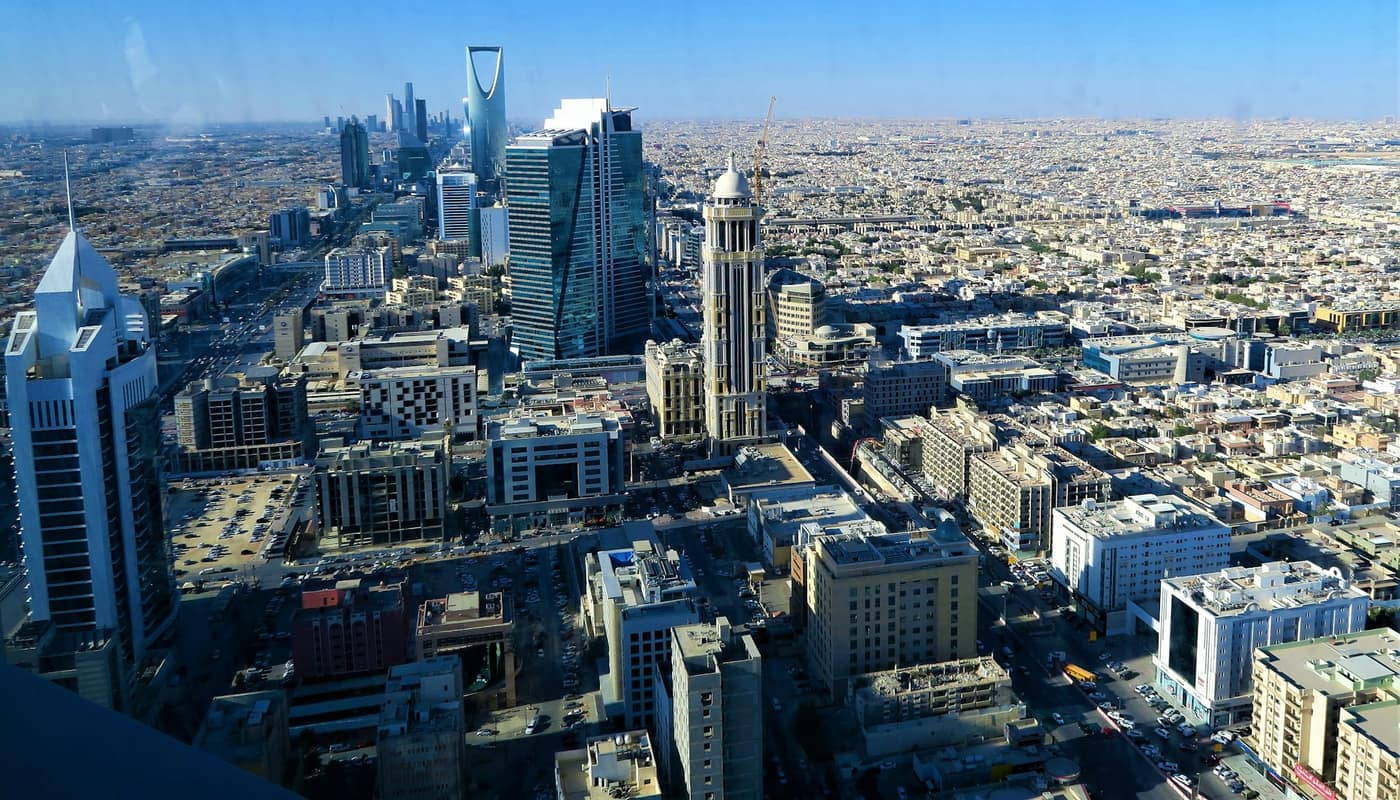
The Gulf states are among the few places in the world where people from other countries outnumber citizens. Understanding why, and what it means for work, society and politics, is essential to reading any story about the region. The picture also varies a great deal from one country to the next.
What do the numbers show?
Official nationality figures are not published by every state, so researchers compile estimates. The Gulf Labour Markets, Migration and Population programme, based at the Gulf Research Center, publishes a table from national statistics for mid-2022. It puts the total population of the six Gulf Cooperation Council states at about 56.2 million, of whom roughly 54.6 percent were non-nationals, with the caveat that some figures are estimates.
By country, the table reports the following non-national shares.
| Country | Non-national share (mid-2022) | Note |
|---|---|---|
| Kuwait | About 70% | National statistics |
| Bahrain | About 53% | National statistics |
| Saudi Arabia | About 42% | Revised using the 2022 census |
| Oman | About 40% | National statistics |
| Qatar | About 88% | Estimate; no nationality breakdown published |
| United Arab Emirates | About 87% | Estimate; no nationality breakdown published |
The two highest shares are estimates, because Qatar and the United Arab Emirates do not publish the population by nationality. Readers should therefore treat them as approximate and check the original source.
Why did the Gulf rely on migrant labour?
When oil revenue began to grow rapidly in the middle of the twentieth century, Gulf states had small populations and few workers with the skills or numbers to build cities, ports, refineries and public services. They recruited labour from abroad: engineers and teachers from other Arab countries, and construction and service workers from South and South-East Asia, among other places. Over time, the pattern became self-reinforcing. The economy expanded in sectors such as construction, hospitality, retail and domestic work that were filled by foreign workers, and the public sector became the main employer of citizens.
The resulting structure is a dual labour market: nationals concentrated in government jobs, and foreigners making up most of the private sector. This is a challenge for diversification, as described in how Gulf economies are diversifying beyond oil, because creating private-sector jobs that attract nationals requires wages and conditions that differ from those that attract migrants.
How are foreign residents admitted?
Most foreign workers enter on temporary work visas tied to a specific employer or sponsor. Historically, this arrangement was known as the kafala, or sponsorship, system. It gave employers a high degree of control over workers’ residency and, in many cases, their ability to change jobs or leave the country. Because the visa depends on a particular job, workers who lose it may need to leave unless they find another sponsor.
Residency is generally linked to employment, so even long-term residents do not usually gain citizenship. Rules differ by country, and several states have introduced longer-term residency options for investors, professionals and others.
What reforms have taken place?
The International Labour Organization has documented major changes in Qatar. According to the ILO, a law in 2020 allowed migrant workers to change jobs without first obtaining a no-objection certificate from their employer, and the earlier removal of exit-permit requirements meant, in its words, that the kafala system was effectively dismantled. It reports that more than 348,000 job-change applications were approved between November 2020 and August 2022, while noting that some workers faced difficulties in changing jobs and that some employers faced delays in recruiting. A non-discriminatory minimum wage of 1,000 Qatari riyals took effect in March 2021, covering all nationalities and sectors, including domestic workers, with allowances for food and housing where employers do not provide them. The ILO also notes remaining gaps, including that freedom of association and collective bargaining are not recognised in Qatar.
Other Gulf states have announced and introduced their own changes, with varying scope. Readers who want the current rules in a given country should consult its labour ministry and the ILO’s country pages, since this is an area where laws and practice are both changing and sometimes diverge.
What is life like for different groups of workers?
The foreign workforce is not one group. At one end are highly paid professionals, such as engineers, doctors, bankers and teachers, who often live in the Gulf with their families for years and have access to private housing, schools and healthcare. At the other end are workers in construction, cleaning, security, hospitality and domestic service, who may live in shared accommodation provided by employers and whose wages are far lower. Their experiences, protections and prospects differ enormously, and general statements about “expatriates” can hide this.
Domestic workers are a particular case, since they work in private homes and labour inspection is harder. The ILO and several governments have developed specific rules for them, including contracts and minimum conditions, with varying coverage and enforcement. The Qatar minimum wage described above explicitly covers domestic workers, which was a notable feature of the reform.
What does this mean for families and money?
Many foreign workers send part of their earnings home, which makes the Gulf a central link in the economies of countries such as India, Pakistan, Bangladesh, Egypt and the Philippines. These transfers are the subject of how migrant remittances link the Gulf to Asia. Many workers live in the Gulf without their families, depending on income thresholds and housing rules, while higher-paid professionals more often bring dependants.
How does it shape society and the economy?
The demographic structure affects almost everything: housing demand, the design of cities, schooling, healthcare, retail and the language of public life. It also affects public policy, including population targets, labour nationalisation programmes and the rights of long-term residents. In small states, citizens are a minority of residents, which gives questions of identity and demography a different weight than in countries where citizens are the majority.
The geography of the region also matters, as the peninsula’s cities draw people from across the world. The setting is described in the Arabian Peninsula explained.
What are the policy debates?
Governments in the region pursue several, sometimes competing, goals. They want to employ more citizens in the private sector, through quotas, training and wage support, often called nationalisation programmes. They also want to remain attractive to skilled foreign workers and investors, and they need low-cost labour for sectors such as construction. Balancing these aims shapes visa rules, fees charged to employers and the pace of reform.
International organisations and researchers add other questions: how to ensure fair recruitment, so that workers do not pay illegal fees to agents; how to enforce wage payment and housing standards; and how to give workers a way to raise grievances. Sending countries also have a role, since they regulate recruitment agencies and negotiate agreements with Gulf states. Progress is uneven, and the most reliable assessments combine government data with independent reports and worker surveys.
What should readers watch?
Three things: updates to national statistics and census data; changes to residency and labour rules, especially those that make it easier for workers to change jobs or stay long term; and the proportion of citizens employed in the private sector. The ILO, the Gulf Labour Markets, Migration and Population programme and national statistical offices are the best primary sources.
Sources: Gulf Labour Markets, Migration and Population Programme; International Labour Organization