Before 1869, a ship carrying goods from Europe to Asia had to sail around the southern tip of Africa. The opening of a canal across the Isthmus of Suez cut thousands of kilometres from that journey. More than 150 years later, the waterway remains one of the world’s most important trade routes, and recent disruption in the Red Sea has shown how much depends on it.
What is the Suez Canal?
The Suez Canal is an artificial waterway in Egypt that connects the Mediterranean Sea at Port Said with the Red Sea at Suez. It has no locks, because the two seas are at roughly the same level, so ships pass through at sea level. According to the Suez Canal Authority, the canal opened in 1869. The authority’s own table lists its length as 164 kilometres in 1869, and as 193.3 kilometres by 2015, following a major expansion project that added a new channel and widened and deepened sections. Britannica notes that the 2015 work added nearly 29 kilometres to the original length.
Ships travel in convoys, with a fixed schedule of northbound and southbound groups, and pass each other at bypass sections or in a parallel channel. A transit typically takes under a day.
How much trade passes through?
Estimates differ by source and year, and they are best read as ranges. The Suez Canal Authority states that about 12 percent of total world sea-borne trade passes through the canal. UNCTAD, the United Nations trade and development body, said the canal handled approximately 12 to 15 percent of global trade in 2023. The International Monetary Fund has put it at about 15 percent of global maritime trade volume, and Britannica gives about 12 percent. The differences reflect varying definitions, such as whether the figure is by value or volume and whether it covers all trade or only certain categories.
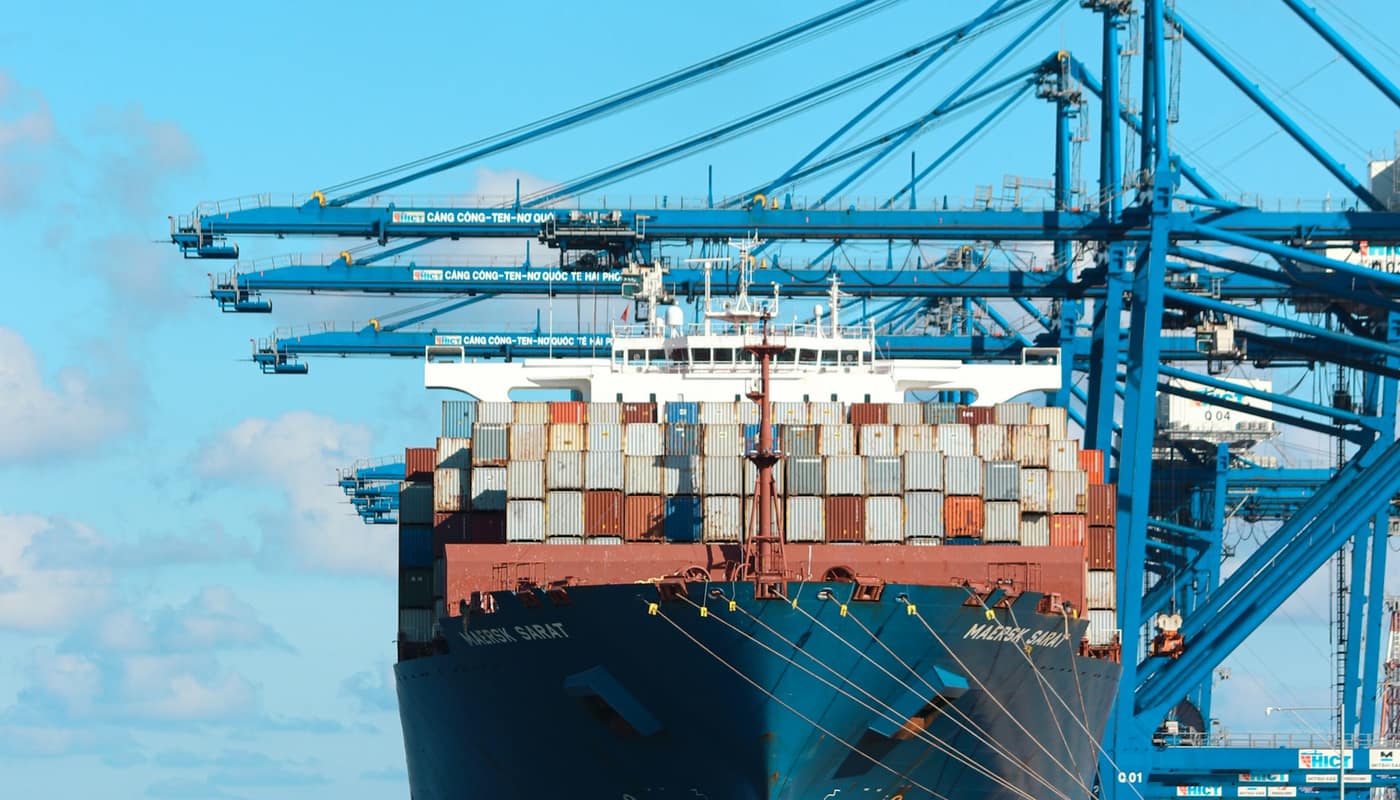
The canal is especially important for container shipping between Asia and Europe and for the movement of oil, gas and other bulk goods. Shorter routes reduce fuel use, transit times and costs.
What does it mean for Egypt?
The canal earns Egypt revenue from transit fees and is also the centre of a wider economic zone with ports and industrial areas. It is therefore a significant source of foreign currency, which makes the country sensitive to changes in traffic. The canal is one of Egypt’s two great waterways, alongside the river that sustains its population, described in Egypt and the Nile.
What has happened to traffic?
Recent years show how sensitive the route is to security conditions in the Red Sea. According to figures reported from the Suez Canal Authority, the canal handled 26,434 transits in 2023, the highest annual total on record, and traffic fell to 13,213 in 2024 and 12,758 in 2025. UNCTAD and the IMF have both documented how attacks on shipping in the Red Sea and the decisions of shipping lines to avoid the area have disrupted global trade, with vessels diverting around Africa.
Diversion has costs. The longer route increases the distance, the fuel burned and the time at sea, which ties up ships and pushes up freight rates and insurance premiums. It can also disrupt schedules, causing delays at ports, and affect goods that depend on just-in-time delivery. The scale of the effect depends on how long the disruption lasts and how many ships avoid the route.
How was the canal expanded?
The authority reports that the waterway was widened and deepened several times since 1869 to take larger ships. The most recent major project, completed in 2015, added a new channel along part of the route and deepened existing sections, which allowed more two-way traffic and reduced waiting times. Britannica describes the work as adding nearly 29 kilometres to the original length, while the authority’s own table puts the overall length at about 193 kilometres. The expansion was intended to raise capacity, cut transit times and handle larger vessels, which are increasingly common in container shipping.
Ship size is a recurring issue. Larger vessels need deeper and wider channels, and a ship that runs aground can block the canal for days, an event that has happened and that shows how a single incident can affect global supply chains. Pilots, tugs and rescue crews are therefore part of the canal’s operation.
What are the alternatives?
The main alternative is the route around the southern tip of Africa, which adds distance and time. Shipping lines weigh this against the cost of insurance and the risk of passing through the Red Sea. Overland alternatives exist for some goods, such as railways across Asia or pipelines for oil, but they carry much less than the canal. For energy, the pipeline that links the Red Sea and Mediterranean in Egypt offers a partial alternative, and Gulf producers have pipelines that avoid some chokepoints. Each option has capacity limits and costs, which is why the canal remains the preferred route when conditions allow.
How does it connect with other chokepoints?
Global trade depends on a handful of narrow passages: the Suez Canal, the Strait of Bab el-Mandeb at the southern end of the Red Sea, the Strait of Hormuz at the mouth of the Gulf, the Strait of Malacca and the Panama Canal. Problems at one can increase pressure on others, and ships that avoid Suez add to traffic elsewhere. The Gulf’s own chokepoint is discussed in why the Strait of Hormuz matters, and the interaction between them shows why governments and companies plan for alternatives, from pipelines to rail links and alternative ports.
How do international rules apply?
The canal operates under Egyptian sovereignty, and its use is governed by an international convention signed in 1888 that provides for free passage of vessels in peace and war, though the application of its provisions has been disputed at times. Questions of transit rights and passage are matters of international law, and trade disputes that arise from restrictions on shipping can be brought to bodies such as the World Trade Organization, described in how the WTO settles trade disputes.
What should readers watch?
Several indicators give a picture of the canal’s role.
- Transit counts and tonnage published by the authority and by independent trackers, compared with the record of 2023.
- Freight rates and shipping line announcements on routing.
- Insurance conditions for ships in the Red Sea.
- Egypt’s reported canal revenues, which show the effect on the national economy.
- Statements from international bodies such as UNCTAD and the IMF, which analyse the impact on trade.
The authority and agencies publish different measures, and some data are released with a delay, so it is useful to note the date and source of any figure.
Why does it matter for ordinary readers?
Goods that travel through the canal include fuel, food, machinery and consumer products. When the route is disrupted, the effects can show up in prices and delivery times, but not always immediately or evenly. For businesses, it affects planning and costs, and for governments, it affects supply security and revenue. Understanding the canal’s role helps readers interpret news about shipping and trade, and see why a narrow waterway in the desert has so much influence over the world economy.
Sources: Suez Canal Authority; UNCTAD; International Monetary Fund; Britannica