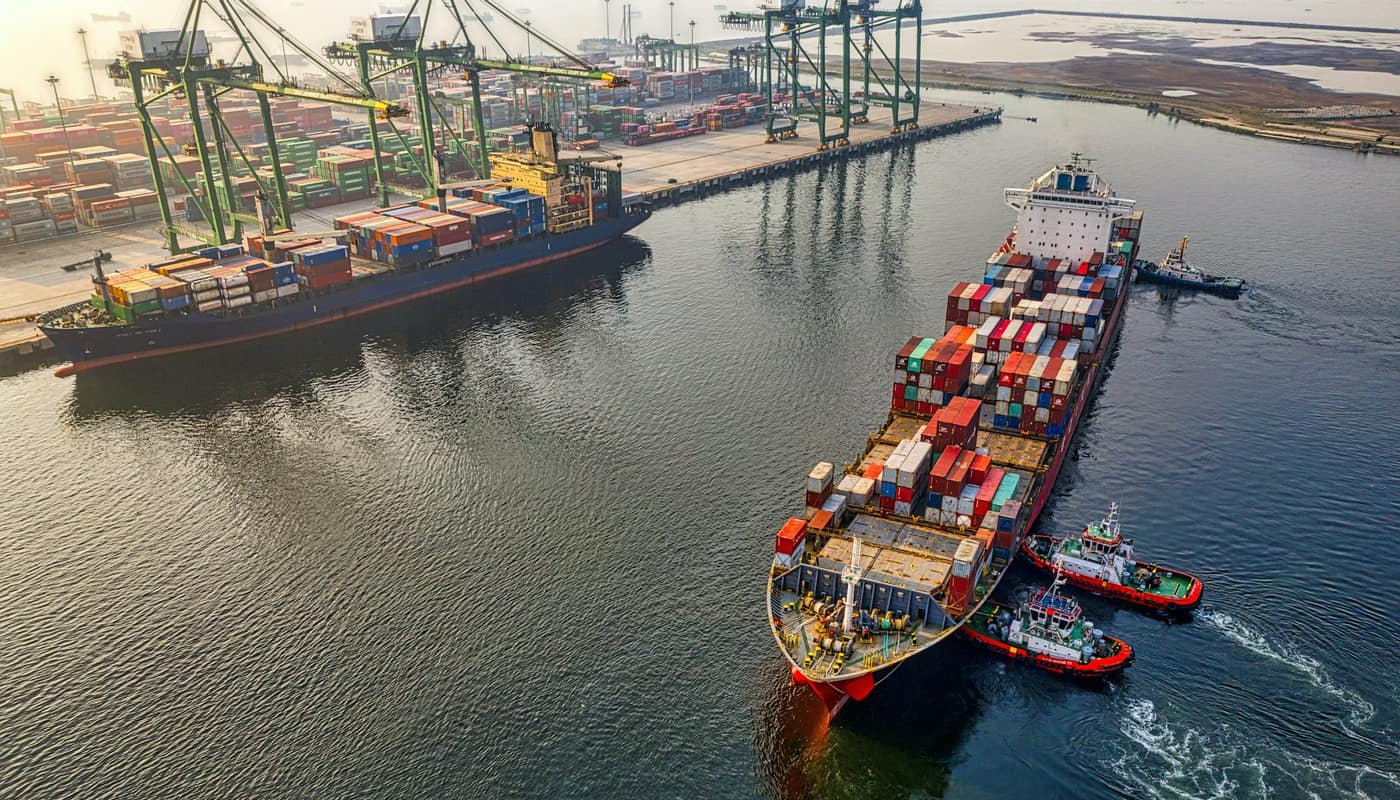
The Strait of Hormuz is a stretch of water between the Musandam peninsula of Oman and the coast of Iran, linking the Gulf to the Gulf of Oman and the open sea. It is narrow, it is the only sea exit for most of the Gulf’s oil and gas exporters, and for those reasons it appears in almost every discussion of energy security. This article explains the structure first, and then describes the situation in 2026, with dates and sources.
What makes it a chokepoint?
A chokepoint is a narrow passage that large volumes of shipping must use. According to the US Energy Information Administration, the strait is 21 miles wide at its narrowest point, but the shipping lanes are only two miles wide in each direction, separated by a two-mile buffer zone. Large tankers must follow these lanes, which limits how many can pass and makes the route sensitive to any obstruction.
Geography leaves little choice. Most of the oil produced around the Gulf, including that of Kuwait, Qatar, Bahrain and Iraq and most of Saudi Arabia’s and the UAE’s output, leaves by sea, and the Gulf’s only outlet to the ocean is the strait. A few countries have pipelines that reach other coasts, but they cover only part of the volume. The wider geography of the region is explained in the Arabian Peninsula explained.
How much oil and gas passes through?
The EIA estimates that oil flows through the strait averaged about 20 million barrels per day in 2024, equivalent to about 20 percent of global petroleum liquids consumption. About one-fifth of global trade in liquefied natural gas also passed through in 2024, mainly from Qatar. The International Energy Agency has said that there are no viable alternative routes for Qatari or Emirati liquefied gas.
These numbers matter beyond the Gulf. Asian economies, including China, India, Japan and South Korea, are major buyers of Gulf oil, and a disruption would affect their supply first, with effects on global prices. Producers’ decisions on output, covered in how OPEC and OPEC+ decide oil output, take transit risk into account.
What are the bypass routes?
Two pipelines can carry crude oil around the strait. Saudi Arabia’s East-West pipeline runs from the Abqaiq processing centre near the Gulf to the port of Yanbu on the Red Sea, with a nameplate capacity of 5 million barrels per day, which the EIA says Aramco temporarily raised to 7 million in 2019. The United Arab Emirates operates the Abu Dhabi Crude Oil Pipeline from Habshan to Fujairah on the Gulf of Oman, with an earlier reported capacity of 1.5 million barrels per day and a more recent EIA listing of 1.8 million. The EIA has estimated that about 2.6 million barrels per day of Saudi and Emirati pipeline capacity could be available to bypass the strait in a disruption, while the IEA has given a higher range of 3.5 to 5.5 million. Estimates differ because they measure spare capacity at different dates and on different assumptions.
Even the higher figures are well below the 20 million barrels per day that normally passes through the strait. And pipelines do not help exporters whose oil fields and ports lie only on the Gulf, or liquefied gas, which needs specialised terminals.
What has happened in 2026?
According to the EIA, a conflict involving Iran that began on 28 February 2026 led to the de facto closure of the strait to normal commercial traffic, and Saudi Arabia and the United Arab Emirates were the only regional producers able to reroute crude exports around it. The EIA has also said that the closure limited the ability of OPEC+ members to increase production.
As of mid-November 2026, shipping trackers reported that traffic remained near a standstill. The International Monetary Fund’s PortWatch, which tracks vessel movements, recorded a single transit on 1 November and three on 8 November, against a pre-crisis baseline of around 85 a day, and trackers reported that no agreement to reopen the passage had been reached. These data come from tracking services that publish with a delay, and status labels differ between them, so the figures should be read as indicative. Readers who need the current position should check the latest EIA and IMF PortWatch updates and official maritime notices.
How is traffic normally managed?
In ordinary times, ships follow a traffic separation scheme, a system of designated inbound and outbound lanes that reduces the risk of collisions in the narrow waters. Vessels also pass through waters controlled by Oman and Iran, and international law on transit passage through straits used for international navigation applies to the strait, a subject on which states have taken different positions. Pilots, port authorities and navy and coast guard units monitor the area, and commercial operators share information through industry bodies.
Insurance is a major factor in how much traffic moves. Insurers charge higher premiums for war risk when tension rises, and some operators decide not to sail when cover is unavailable or too costly. That means traffic can fall even when the passage is physically open, which is one reason analysts watch transit counts, not only official statements.
Who bears the cost of a disruption?
The effects are wide. Producers lose export revenue and may have to curtail output when storage fills. Importers face higher prices and tighter supplies, and shipping and insurance costs rise. Governments with strategic reserves can release stocks to cushion the effect, and some importing countries diversify their suppliers over time. In the Gulf, the experience has focused attention on infrastructure that bypasses the strait and on the financial buffers discussed in how Gulf sovereign wealth funds work.
Why does it matter for people outside the energy industry?
Energy is an input into almost everything, so a sustained disturbance in supply travels through the economy. Higher fuel costs raise the price of transport and goods. Fertiliser and petrochemical supplies, which also depend on Gulf gas and oil, can be affected, with consequences for agriculture and manufacturing. Central banks watch energy prices because of their effect on inflation, and governments in importing countries weigh them in budgets and subsidies. At the same time, high prices encourage conservation, new supply elsewhere and faster adoption of alternative energy, which is why disruptions can have long-run effects on markets beyond the immediate shock.
What should readers watch?
Three indicators give the clearest picture. First, transit counts from independent trackers, compared with the pre-crisis baseline. Second, the volumes moving through the bypass pipelines and the Red Sea and Gulf of Oman ports they serve, which show how much supply has been rerouted. Third, official statements from the producing and consuming governments and from maritime authorities about safe passage.
It is also worth distinguishing the structure from the event. The geography and the limited bypass capacity are permanent features, and they explain why the strait draws so much attention. The 2026 disruption is a specific episode whose course depends on decisions and events that this article cannot predict. Other maritime routes face their own risks, as discussed in why the Suez Canal matters to world trade.
This article is general information, not investment advice, and not a forecast of oil prices or of events.
Sources: US Energy Information Administration; International Energy Agency; IMF PortWatch