Walk into almost any historic mosque, palace or madrasa in the Arab world and two kinds of decoration will be everywhere: flowing lines of lettering and interlocking patterns of stars and polygons. They are different crafts, with different methods, but they share a basic idea: that beauty can be found in disciplined order, and that writing and design can be among the highest forms of art.
What is Arabic calligraphy?
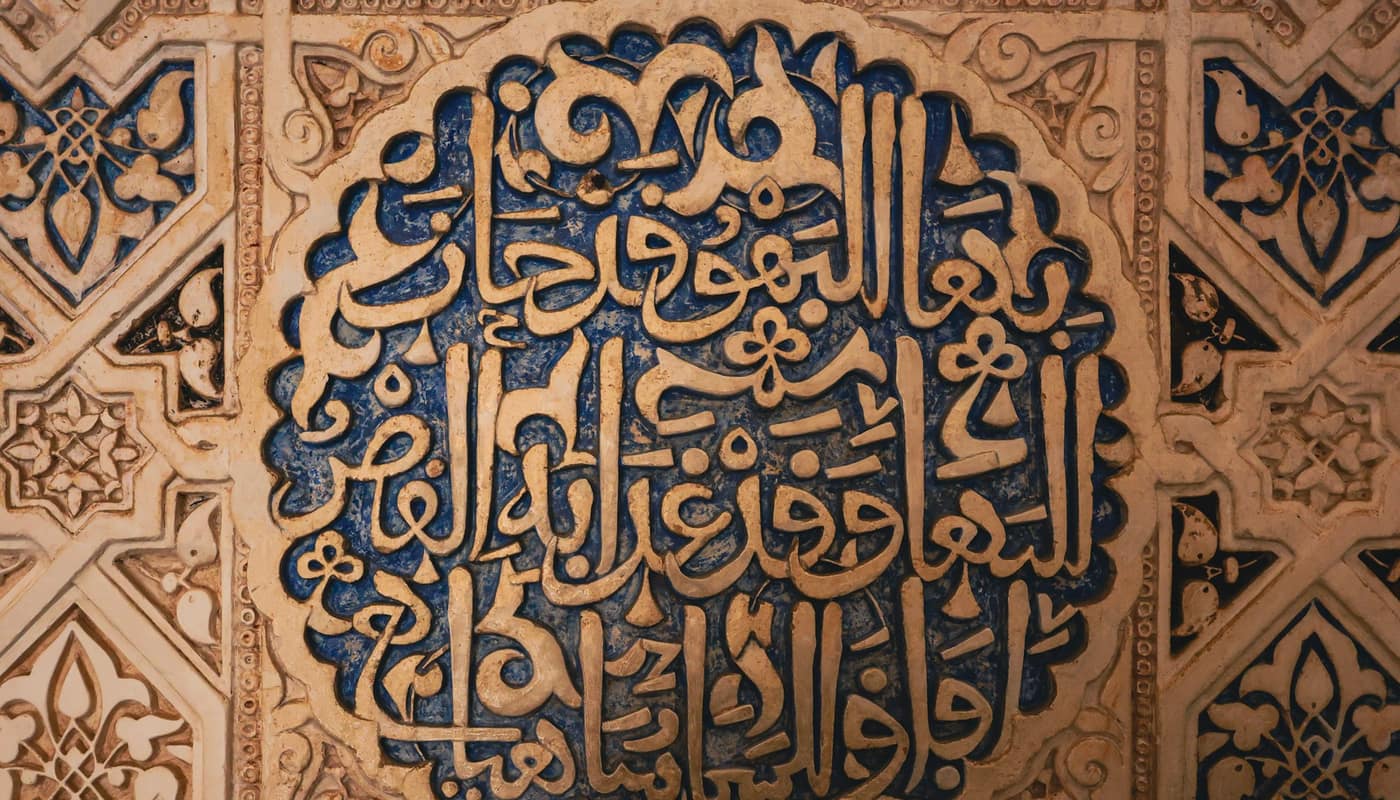
Calligraphy is the art of beautiful writing. In the Arabic tradition, it became central because the written word carries the Quran and a rich literary heritage, and because Islamic art generally favoured abstraction and text over figurative representation in religious settings. Calligraphers copy sacred and literary texts, design inscriptions for buildings and create independent works of art.
UNESCO describes Arabic calligraphy as the practice of writing the Arabic script by hand in a flowing style, using the 28 letters of the alphabet in cursive form. In December 2021, the 16th session of its Intergovernmental Committee for the Safeguarding of the Intangible Cultural Heritage inscribed “Arabic calligraphy: knowledge, skills and practices” on the Representative List of the Intangible Cultural Heritage of Humanity. The nomination was presented jointly by sixteen states: Algeria, Bahrain, Egypt, Iraq, Jordan, Kuwait, Lebanon, Mauritania, Morocco, Oman, Palestine, Saudi Arabia, Sudan, Tunisia, the United Arab Emirates and Yemen.
What tools and materials do calligraphers use?
The central tool is the qalam, a pen cut from a reed or a bamboo stem, with a tip trimmed at an angle to create thick and thin strokes. UNESCO’s description of the practice notes that traditional ink is made from natural materials, mentioning a mixture of honey, black soot and saffron. Paper is often prepared by coating it with starch and burnishing it so that the pen glides smoothly. Learning the craft takes years, usually under a master who grants a licence, called an ijaza, when the student has mastered the required scripts.
The nomination file also raised concern that the number of specialist calligraphers has fallen, and it described safeguarding measures taken by the states involved, such as state awards for calligraphers and training programmes. That is an example of why intangible heritage lists exist: they draw attention to skills that depend on people passing them on.
What are the main scripts?
Calligraphers have developed many styles over the centuries. A few of the best known are:
- Kufic, an angular, geometric script that was used in early Quranic manuscripts and later in architecture and decorative work.
- Naskh, a clear, rounded script that became standard for copying books and is the basis of most printed Arabic.
- Thuluth, a large, elegant script with sweeping curves, often used for inscriptions on mosques and for titles.
- Diwani, a flowing, dense script associated with the Ottoman court.
- Nastaliq, a hanging script developed in Persian lands and used for Persian and Urdu as well.
- Ruq’ah, a simple, compact hand used for everyday handwriting.
Each style has rules of proportion, often based on the dot made by the pen, so that letters have consistent size and rhythm. A reader trained in one style can usually read the others, but the visual effect is very different.
How does geometric art work?
Islamic geometric patterns are made by dividing a circle into equal parts and joining points with straight lines to build stars, polygons and repeating tiles. A simple compass and straightedge are enough, and the patterns can be extended indefinitely in every direction, which suggests infinity. They appear in tilework, carved plaster and wood, metalwork, textiles and the lattice screens that let in light and air.
Designers use a small number of building blocks, such as six-fold, eight-fold, ten-fold and twelve-fold stars, to create complex arrangements. Some patterns are visible at several scales, with large forms made of smaller ones. Contemporary mathematicians and designers have analysed these constructions, and the Islamic tradition is often cited as a rich example of applied geometry.
What is the arabesque?
The arabesque is a related form: a flowing pattern of stylised vines, leaves and flowers that curves and repeats across a surface. Where geometric patterns are built from straight lines and fixed angles, arabesques use rhythmic curves. They often appear together with geometry and calligraphy in the same building, so that a wall may combine a band of lettering, a field of stars and a frame of vines.
Where can people see these arts?
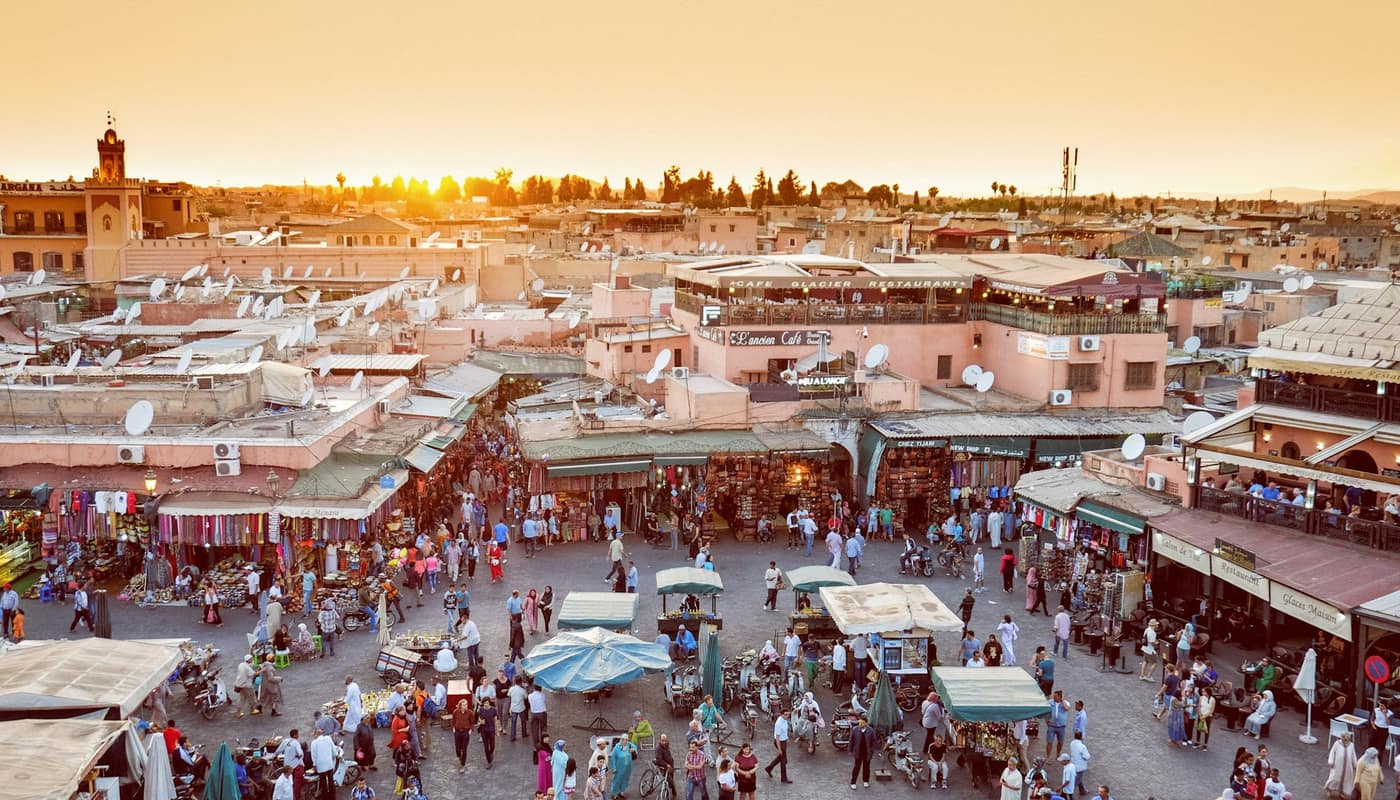
Historic examples are found across the Arab world: in the carved plaster and tiled courtyards of the medinas of North Africa, in the great mosques and palaces of Cairo and Damascus, in the domes and minarets of the Gulf, and in manuscripts held in museums and libraries. In Marrakech, for instance, the old city is a showcase of woodwork, tile and plaster, a theme explored in Marrakech medina and Jemaa el-Fnaa explained. Contemporary museums, including those described in how Gulf museums are reshaping cultural life, collect and exhibit both historic and modern works.
Calligraphy also thrives in everyday life: in shop signs, logos, posters, graffiti and the work of contemporary artists who combine traditional scripts with new media. Because the script is shared with the standard written language, as explained in Modern Standard Arabic and the dialects explained, it is both a practical writing system and an art form.
How is the craft being kept alive?
Calligraphy has adapted to every new technology. Printing, typewriters and computer fonts all changed how Arabic script is produced, and designers have created digital typefaces that draw on the proportions of the classic hands. At the same time, schools, studios and cultural centres teach traditional methods, and competitions and festivals bring calligraphers together. Contemporary artists combine letterforms with painting, sculpture, photography and light installations, so the tradition appears in galleries as well as in mosques.
Geometric design has also found new uses in architecture, product design and fashion, and mathematicians have studied it as a rich example of symmetry. The challenge, for both crafts, is to maintain the technical knowledge that comes from years of practice. Mentoring relationships, apprenticeships and documentation all play a part, which is why UNESCO’s list pairs recognition with safeguarding measures.
How can readers tell the styles apart?
A few visual cues help. Kufic letters are squared and horizontal, with long straight strokes, and often appear in monumental inscriptions. Naskh is regular and compact, with clear spacing, as in printed books. Thuluth has tall verticals and generous curves and usually fills large decorative panels. Diwani lines are tightly packed and slope upward to the left. Nastaliq letters seem to hang in cascading diagonals. Once a reader has seen examples of each side by side in a museum or book, the differences become easy to recognise.
How can visitors engage respectfully?
Many inscriptions contain Quranic verses or the names of God and should be treated with respect: not touched, stepped on or photographed in ways that cause offence. Visitors to mosques should follow the dress code and rules of the place, which are usually posted at the entrance. Workshops and classes in calligraphy and geometric design are available in many cities for those who want to try the craft, and buying from local artisans supports the skills that the UNESCO recognition aims to protect.
Sources: UNESCO Intangible Cultural Heritage Convention; UNESCO