Marrakech is one of the most visited cities in the Arab world and Africa, and most visitors spend their time in its old walled quarter, the medina. It is a dense maze of lanes, courtyards, workshops and markets, centred on a huge open square that changes character from morning to night. A little background makes it easier to enjoy.
What is the medina?
A medina is the historic walled part of a North African city. In Marrakech, it dates back to the eleventh century, when the city was founded, and it kept its role as a political and commercial centre through successive dynasties. The medina is a living neighbourhood: people shop, work and pray there, and thousands of families live inside the walls.
UNESCO inscribed the Medina of Marrakesh on the World Heritage List in 1985, under criteria (i), (ii), (iv) and (v), and its register gives the property’s area as 1,107 hectares. The listing reflects the combination of monuments, the urban fabric of houses and lanes, and the traditional crafts and activities that continue within them.
What is Jemaa el-Fnaa?
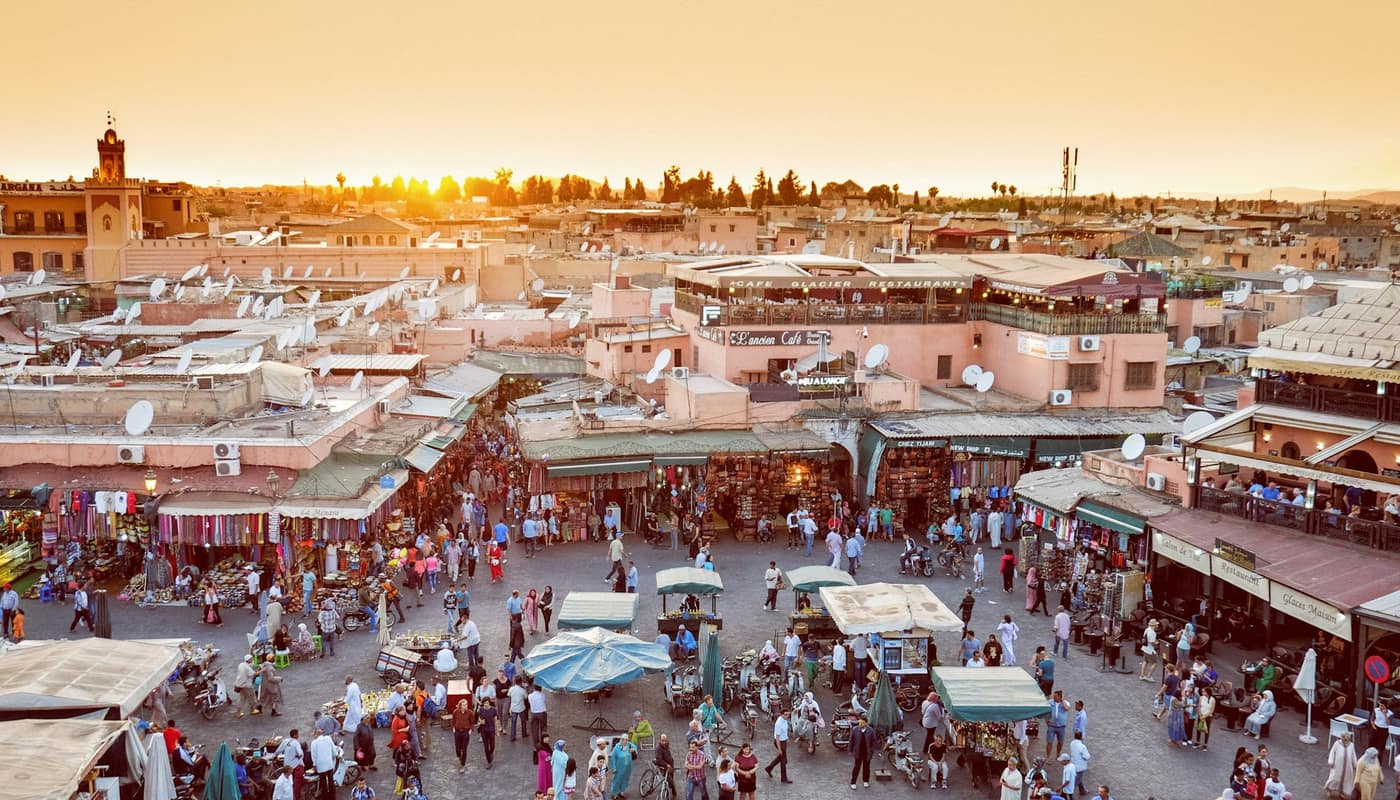
Jemaa el-Fnaa is the large square at the entrance to the medina, surrounded by restaurants, stalls and public buildings. UNESCO describes it as a triangular square. By day it holds juice sellers, snake charmers, performers and vendors, and in the evening food stalls fill the central space with smoke, lights and music, while storytellers and musicians draw crowds.
The square has two kinds of heritage recognition, and it is useful to know the difference. The medina as a whole is on the World Heritage List, which protects places. The cultural space of Jemaa el-Fnaa was also inscribed on UNESCO’s list of intangible cultural heritage in 2008, which recognises living practices: the storytelling, music, performance and social life that take place there, passed from one generation to the next. The text of the inscription reflects that it was proclaimed earlier under a programme that preceded the 2003 Convention, and it was transferred to the Representative List when that list was created.
How is the old city laid out?
At first, the medina seems like a labyrinth, but there is a logic.
- The square is the main orientation point, with the Koutoubia minaret, a landmark visible from many parts of the city, nearby.
- The souks, or markets, lead north from the square, grouped by trade: leather, metal, textiles, spices, slippers, lanterns and so on.
- The old palaces and mosques are scattered through the quarter, some open to visitors and others only to worshippers.
- Residential lanes branch off the commercial streets, and many lead to riads, traditional houses built around a central courtyard, a number of which now operate as guesthouses.
- Gates and walls mark the edge of the old city, and landmarks such as gates help with orientation.
Rooftop terraces offer views over the roofs, and from many places the Atlas Mountains can be seen in the distance on a clear day.
What is there to see and do?
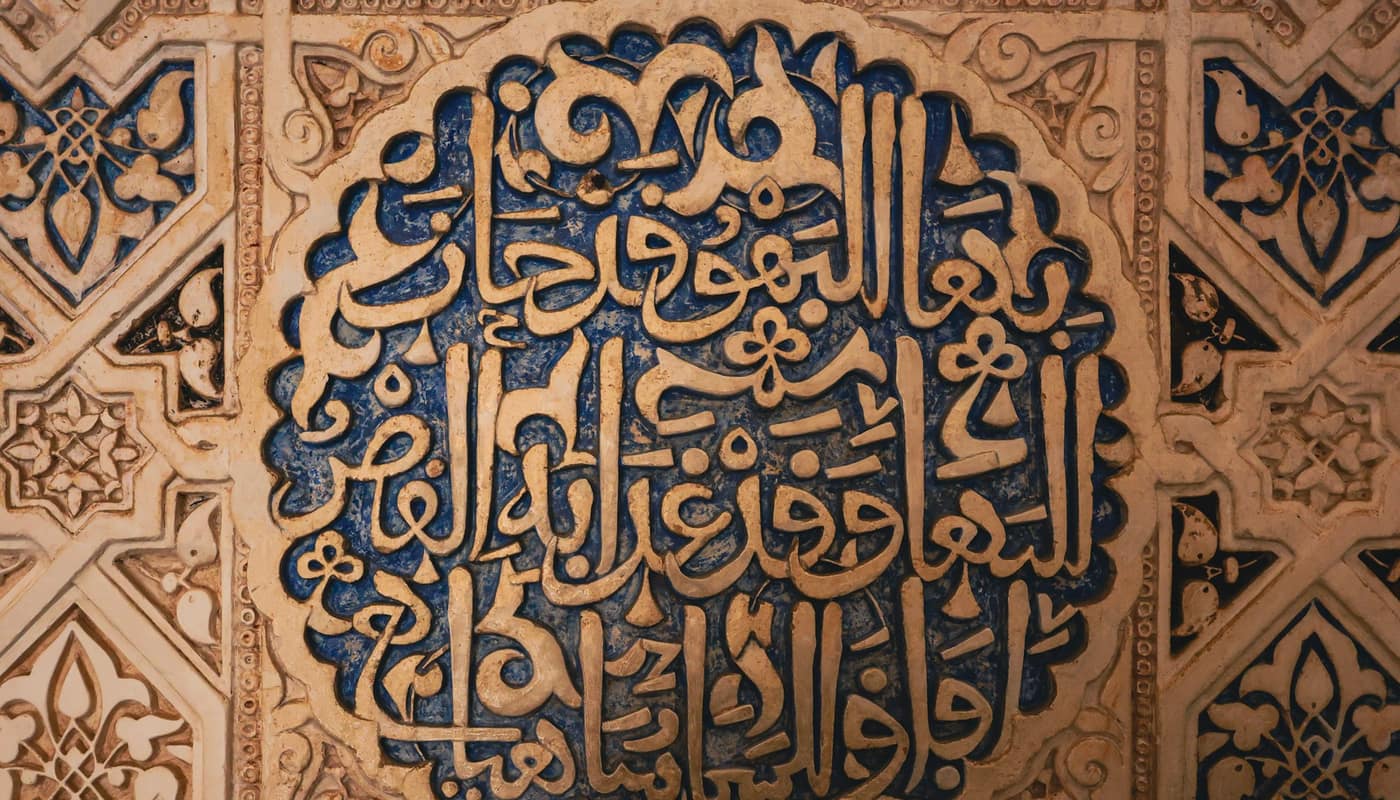
Highlights include historic palaces and the madrasa, a former Islamic college, with carved wood and tiled courtyards, as well as gardens and the souks. The decorative traditions seen in the buildings, such as carved plaster, painted wood, geometric tilework and calligraphy, are described in Arabic calligraphy and Islamic geometric art. The crafts behind them are still practised in workshops in the souks, and visitors can watch metalworkers, leather workers, weavers and woodworkers.
Food is a major attraction. Local specialities include tagine, couscous, grilled meats, pastries and mint tea, and the evening food stalls in the square offer a range of dishes. Visitors with dietary requirements should ask about ingredients, and those with sensitive stomachs may prefer busy stalls and freshly cooked food.
How should visitors find their way?
Navigation in the medina can be confusing, and mapping apps do not always work well in the narrow lanes. A few practical tips help.
- Use landmarks such as the minaret and the main gates to orient yourself.
- Ask your riad or hotel for directions and for a simple map with their address in Arabic, so that you can show it to someone if you are lost.
- Be wary of unofficial guides who offer to lead you, since they often expect payment or direct visitors to shops. A licensed guide arranged in advance is a better option.
- Carry small notes for purchases and tips.
- Mind the traffic. Motorbikes, bicycles and carts use the lanes, so step aside when you hear a horn.
How does bargaining work?
Prices in the souks are generally not fixed, and bargaining is expected. A common approach is to be polite, ask the price, make a lower offer and settle somewhere in between. It helps to have an idea of what an item is worth, and it is fine to walk away. Fixed-price shops and cooperatives are an alternative for those who prefer not to bargain. Do not begin negotiating unless you are interested in buying, since vendors may take it as a commitment.
How does Marrakech fit into the wider story of the Arab world?
Morocco is part of the Maghreb, the western region of the Arab world discussed in what the Arab world is and how the Arab League works. Its cities share traditions of craft, hospitality and public life with cities elsewhere in the region, and also have their own character shaped by Amazigh, Arab, Andalusian and African influences. Travellers who like heritage sites might pair Marrakech with the rock-cut city of Petra in a longer journey across the region.
What are the quick facts?
- City founded: In the eleventh century.
- World Heritage listing: 1985, criteria (i), (ii), (iv) and (v).
- Listed area: 1,107 hectares.
- Jemaa el-Fnaa: Inscribed as a cultural space on UNESCO’s intangible heritage list in 2008.
- Landmarks: The Koutoubia minaret, the souks, historic palaces and riads.
What are the main challenges for the old city?
A living medina faces pressures. Tourism has made some houses more valuable as guesthouses, which can raise rents and change the mix of residents. Heavy visitor numbers strain narrow lanes, and the maintenance of old buildings, many of them made of earth and lime, is a constant task. Traffic, noise and waste need management. Heritage bodies and local authorities work on restoration and rules, and UNESCO’s listing places responsibility on the state to protect the site’s value.
Visitors can support the old city by staying in locally run accommodation, eating at local restaurants, buying directly from artisans and respecting the lanes as a place where people live. These choices help maintain the community that gives the medina its character.
What should visitors know before travelling?
Check government travel advice and entry requirements, and consider the season: spring and autumn are comfortable, while summer is very hot. Dress modestly in the medina, out of respect for local norms and to avoid unwanted attention. Ask before photographing people, especially performers and vendors who may expect a tip. And leave time to simply wander, since the medina rewards unhurried exploration.
Sources: UNESCO World Heritage Centre; UNESCO Intangible Cultural Heritage