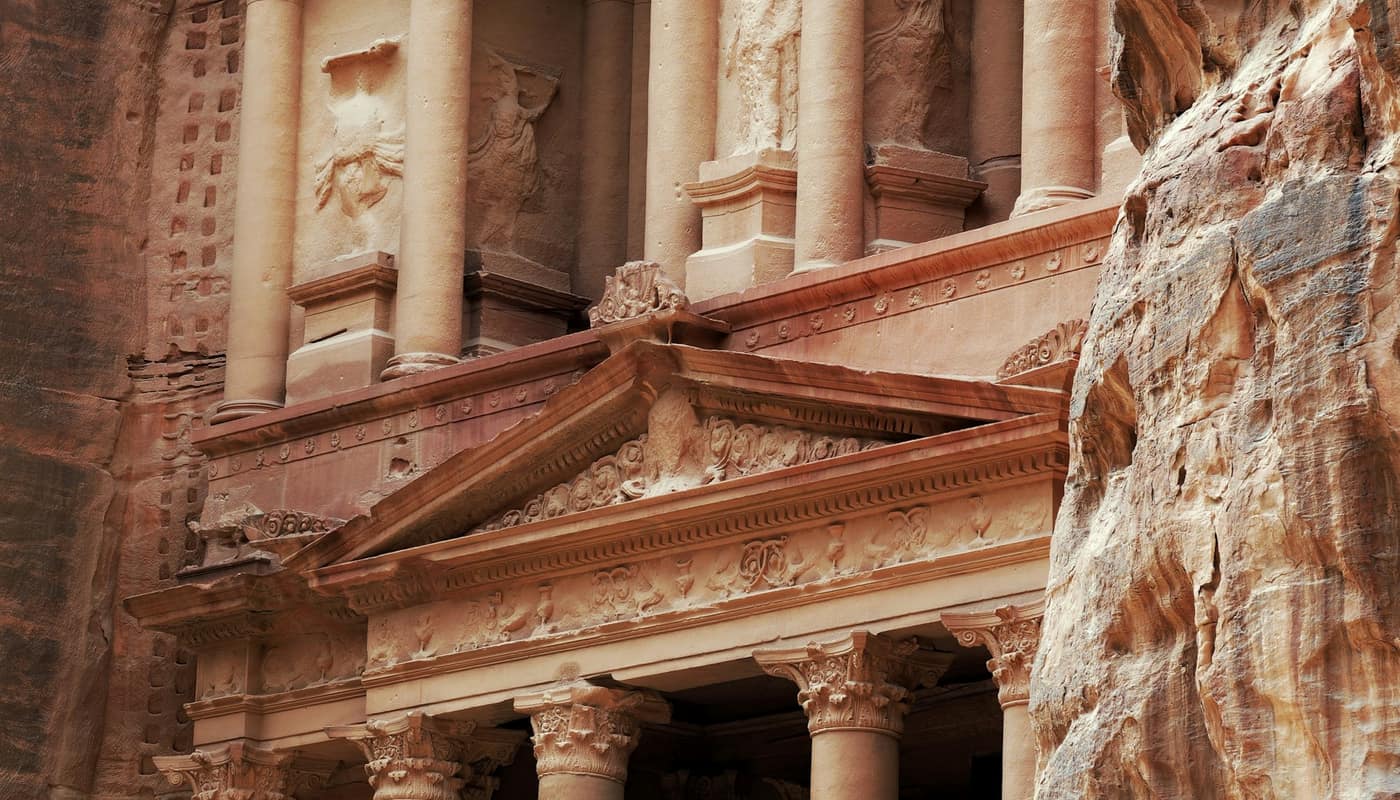
Approaching Petra on foot is a deliberate experience. A narrow gorge, a kilometre or more long, winds between rock walls, and at the end a carved facade appears in a gap of light. The monument that greets visitors, the so-called Treasury, is only the best known of hundreds of tombs, temples and houses cut into the rock or built around it.
What is Petra?
Petra is an ancient city in southern Jordan, in the Ma’an Governorate, in a basin of sandstone mountains. UNESCO inscribed it on the World Heritage List in 1985, under criteria (i), (iii) and (iv), and its property covers about 26,000 hectares. UNESCO describes it as the rock-cut capital of the Nabataeans, an Arab people who built a trading kingdom on the caravan routes that linked southern Arabia with the Mediterranean.
The city grew rich in the Hellenistic and Roman periods. Its monuments combine Hellenistic architectural forms with Nabataean rock-cut design, and they show the contact between local traditions and the wider Mediterranean world.
How did people live in such a dry place?
Water engineering was the key. UNESCO notes that an ingenious water-management system allowed extensive settlement of an essentially arid area during the Nabataean, Roman and Byzantine periods. Channels, cisterns, dams and conduits collected and stored rain and spring water, and moved it into the city. The system also protected the city against floods, since the sudden rains that fall on the surrounding mountains can rush through the narrow valleys.
Understanding this is useful for a visitor, because it explains why the city is where it is and why the Siq, the narrow gorge, has the channels and dams that can be seen along its walls.
What are the main monuments?
UNESCO lists the best-known monuments as the Khasneh, known as the Treasury, the Urn Tomb, the Palace Tomb, the Corinthian Tomb and the Deir, usually called the Monastery. Many other tombs, a theatre, a colonnaded street, temples and houses can be seen, and the extent of the site is larger than most first-time visitors expect.
- The Siq is the main eastern entrance, a winding gorge of high rock walls.
- The Treasury is the iconic carved facade that appears at the end of the Siq.
- The Street of Facades is a row of tombs carved in a cliff face.
- The Theatre is a Nabataean theatre cut into the rock.
- The Monastery is a large carved monument high above the city, reached by a long stepped climb.
- The High Place of Sacrifice is a mountain-top ritual site with views over the valley.
What is the history of the site beyond the Nabataeans?
After the Roman annexation of the Nabataean kingdom in the early second century, Petra continued as a provincial city. Its fortunes declined as trade routes shifted, and an earthquake in the fourth century damaged many buildings. Byzantine churches were built in the city, and later it was largely abandoned, remaining known to local Bedouin communities but little to outsiders until a European traveller reached it in the early nineteenth century. Archaeological work since then has uncovered much of the city, and research continues.
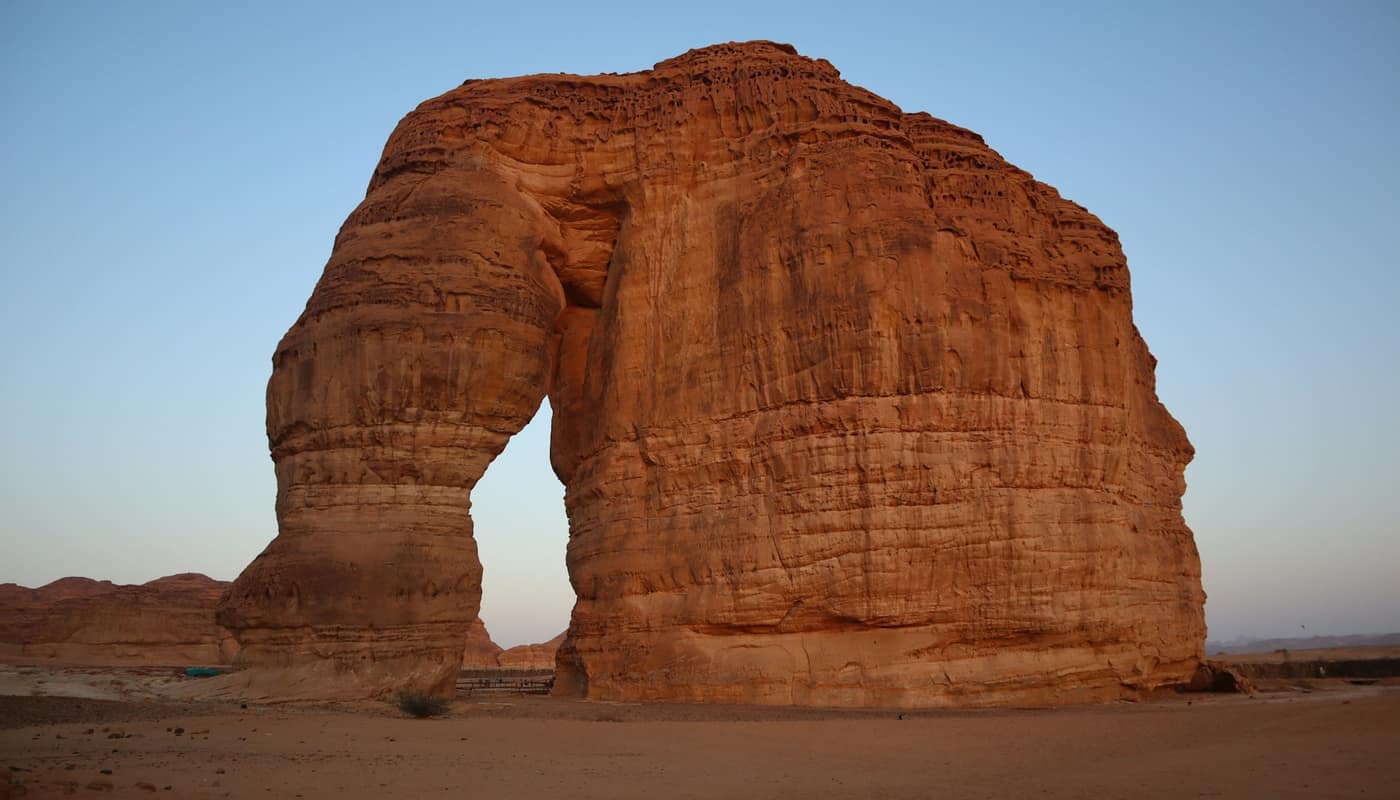
A related site in the Arabian Peninsula, described in AlUla and Hegra, preserves another side of the same civilisation.
What are the conservation challenges?
UNESCO says that the site is vulnerable to flash flooding along the Wadi Musa through the gorge if the Nabataean diversion system is not continually monitored, repaired and maintained. Tourism pressure is another concern, especially at the Siq, the main entrance, where large numbers of visitors and animals share a narrow space. Italy has been a major partner in conservation since 2011, funding work on the stability of the Siq and on the Palace Tomb, according to UNESCO.
These issues have practical consequences for visitors. Some areas may be closed for conservation or safety, and rules on climbing and touching are strictly enforced.
How should visitors plan?
Petra rewards time. A single day allows the main route, from the entrance through the Siq to the Treasury and on to the colonnaded street, and it can be tiring. Two or more days let visitors see the Monastery, climb to viewpoints and explore quieter areas. Distances are long, and the terrain is uneven, with many steps.
- Season. Spring and autumn are the most comfortable. Summer is very hot, and winter can be cold and wet, with a risk of flooding.
- Start early. Arriving at opening time means cooler temperatures and fewer crowds.
- Footwear and water. Sturdy shoes, a hat and plenty of water are essential.
- Guides. A licensed local guide adds context and can help you avoid wasted effort.
- Tickets and hours. Fees, opening times and any evening events are set by the Jordanian authorities and change, so check the official sources before travelling.
What are the quick facts?
- Listing: UNESCO World Heritage Site, inscribed in 1985.
- Criteria: (i), (iii) and (iv).
- Area: About 26,000 hectares.
- Culture: Nabataean, later Roman and Byzantine.
- Famous parts: The Siq, the Treasury, the Street of Facades, the Theatre and the Monastery.
- Main risks: Flash flooding and tourism pressure.
Is there more to Petra than the Treasury?
Yes, and many visitors say the less crowded parts are the most rewarding. Beyond the main route, trails lead to viewpoints, to hidden tombs and to the High Place of Sacrifice. The Monastery, far larger than the Treasury, sits at the top of a long climb of hundreds of steps, and the effort is repaid by its scale and by views across the valley. Further out are other Nabataean sites in the surrounding mountains, and a nearby village known as Little Petra has carved dwellings and a painted ceiling in a smaller, quieter setting.
Local guides can recommend walks that match a visitor’s fitness and time. As with any rock-cut site, going slowly and looking closely at the details, such as the weathering, the inscriptions and the stonework, brings out much more than a quick walk-through.
How should visitors behave?
Respect the monuments by not climbing on them or touching carved surfaces, and take rubbish with you. Be considerate with animals: donkeys, horses and camels are used to carry visitors, and their treatment has been a subject of concern. Choose ways of moving around that treat animals well, and avoid anything that appears to harm them. Dress modestly, and ask before photographing local people.
How does Petra fit into a wider trip?
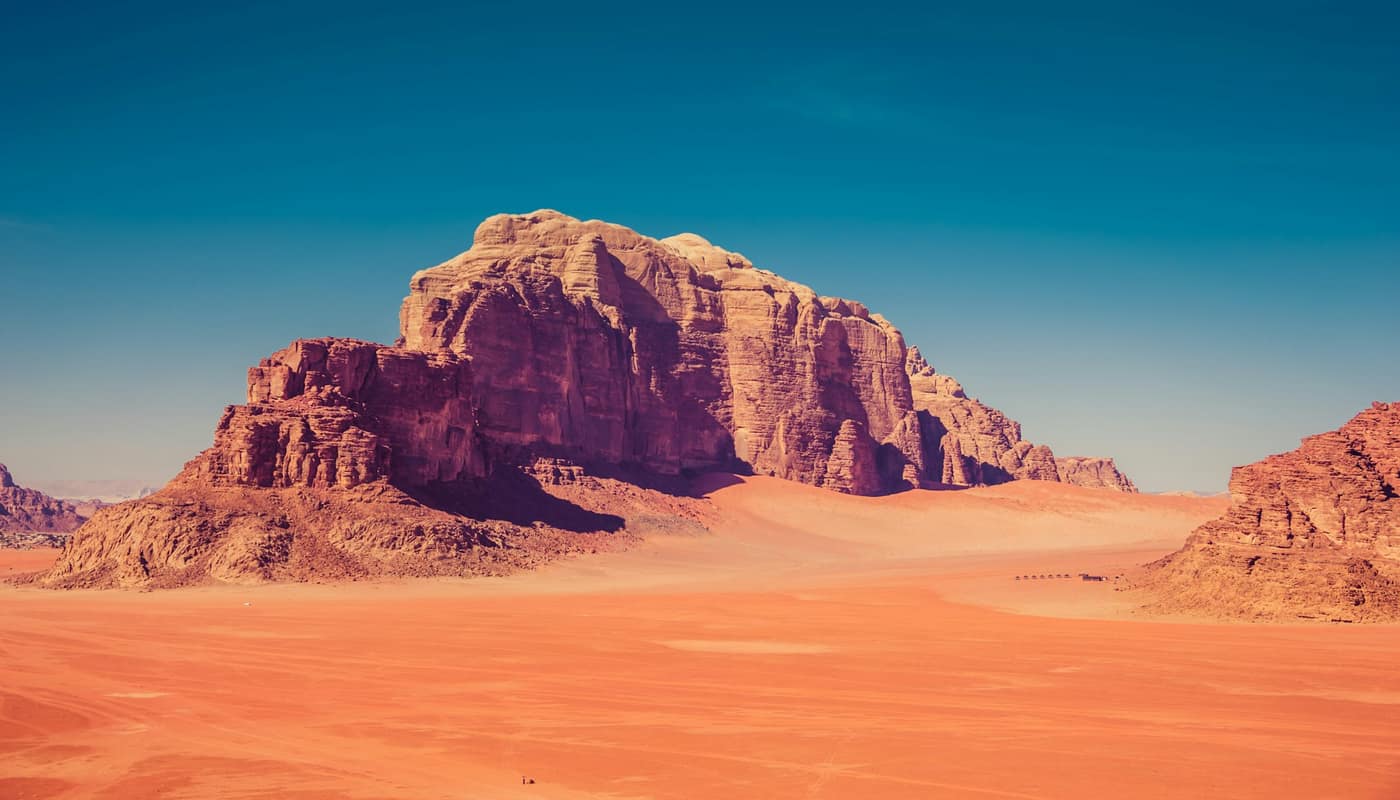
Many visitors combine Petra with the desert landscape described in a guide to Wadi Rum, Jordan’s desert valley, with its camps and rock formations. Others add Amman, the Dead Sea and the Red Sea coast at Aqaba. Elsewhere in the region, cities offer different historic experiences, such as the old medina of Marrakech. The museums that tell the wider story of the region’s art and history are covered in how Gulf museums are reshaping cultural life, but note that not all are on the same routes.
Before going, check government travel advice, entry requirements and insurance. Petra’s setting, its engineering and its sheer scale make a visit memorable, and a little preparation helps visitors enjoy it while helping to protect it.
Sources: UNESCO World Heritage Centre; UNESCO