Arabic coffee is served at weddings, business meetings, funerals, festivals and in the daily visits of friends and neighbours. A small cup, often poured only a little at a time, signals welcome and respect. The tradition is so central to social life in much of the Arabian Peninsula that it has been recognised by UNESCO as a living cultural practice.
What did UNESCO recognise?
UNESCO inscribed “Arabic coffee, a symbol of generosity” on the Representative List of the Intangible Cultural Heritage of Humanity at the tenth session of its Intergovernmental Committee in Windhoek, Namibia, in 2015. The element was nominated by the United Arab Emirates, Oman, Qatar and Saudi Arabia. A later decision of the Committee extended the inscription to include Jordan, replacing the original entry with an expanded one, according to the UNESCO register.
UNESCO’s description emphasises that Arabic coffee highlights an important aspect of generosity in Arab societies and the associated traditions of hospitality, and that it brings together people of all backgrounds, genders and religions and builds relations among them. The recognition is for the knowledge, skills and customs around making and serving the coffee, not for a particular brand or product.
How is it made?
Arabic coffee, called gahwa or qahwa in the region, is typically made from lightly roasted beans, which give a pale golden or light brown colour, quite different from the dark roast used for espresso. The beans are ground and brewed in a pot, and spices are often added. Cardamom is the best known, and some regions add saffron, cloves or ginger. The result is a thin, aromatic drink, usually served without milk or sugar.
The roasting, grinding and brewing are traditionally done by the host, using specialised equipment: a pan for roasting, a mortar for crushing and a set of pots. Techniques and flavours differ among regions and families, and many people take pride in a particular recipe.
What is the equipment?
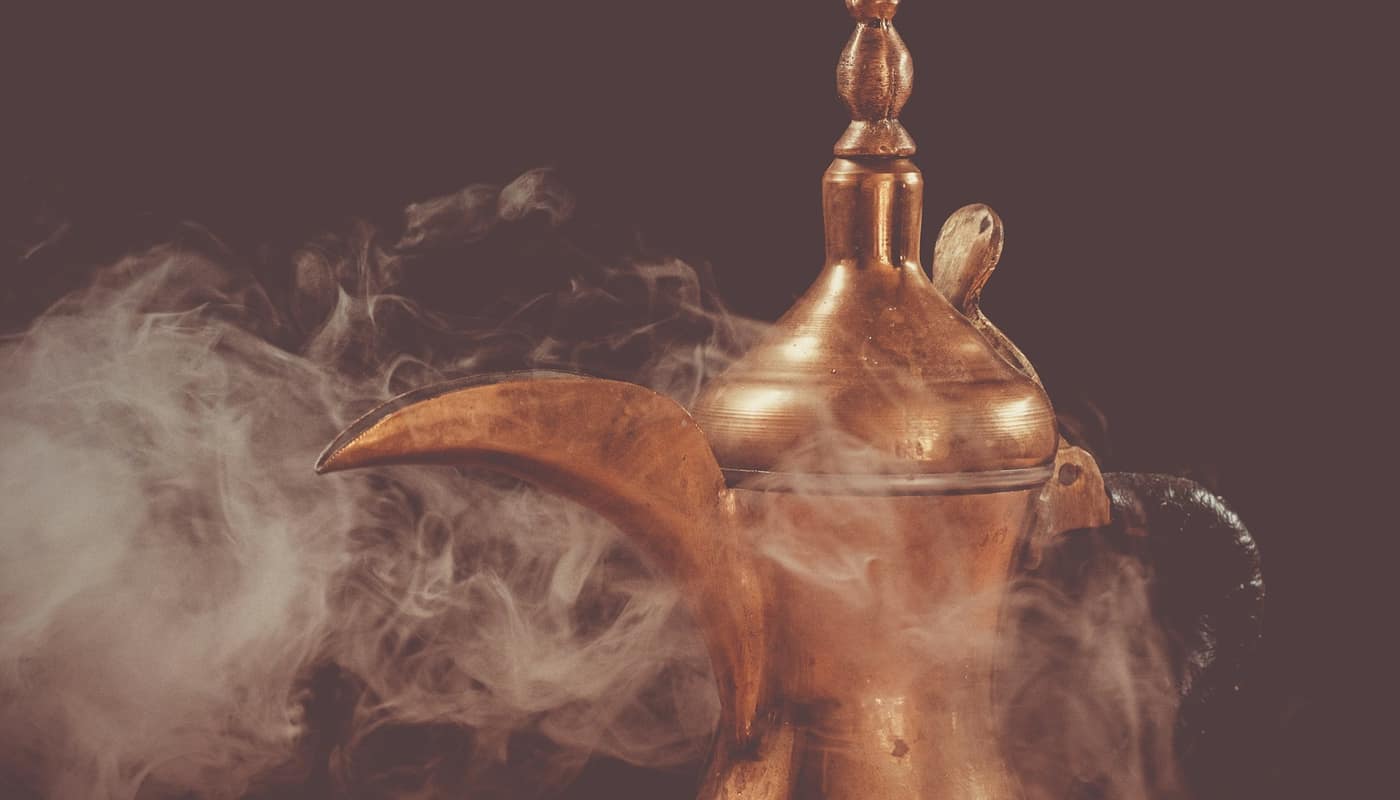
The most recognisable item is the dallah, a pot with a long, curved spout, a lid and a handle, usually made of brass, copper or steel. It is used to brew and to pour. Coffee is served in small handleless cups called finjan, which hold only a mouthful. Dates, sweets or dried fruit are often served alongside, since the coffee itself is bitter and unsweetened, and the sweetness of the fruit balances it.
A host may have several pots, one for brewing and one for serving, and the pots may be passed down through families. In homes and in the reception rooms known as the majlis, a coffee set is often displayed as a symbol of hospitality.
How is it served?
Customs differ, but several are widely observed. The host or a designated server pours the coffee, typically starting with the guest of honour or the eldest, and offers the cup with the right hand. The cup is filled only a little at a time, so it can be refilled and kept warm and fresh. Guests accept the cup, drink and may be offered more. When a guest has had enough, the usual signal is to shake the cup gently from side to side before handing it back, and without this signal the server may keep refilling it.
The order and manner of service convey respect, and there are local variations about which hand to use, how many cups are customary and when coffee is offered. A visitor who is unsure can watch the host and follow what others do.
Why does it matter socially?
Serving coffee marks the start and end of a visit. It is a way of welcoming strangers, resolving disputes and honouring agreements, and in tribal and village life, offering coffee to a guest was a sign of protection and obligation. Business meetings and negotiations often begin with coffee, and it appears in ceremonies of marriage and reconciliation. The practice is described by UNESCO as one that unites people and builds relationships, which is why the recognition places it with other forms of living heritage, such as the falconry traditions of the region.
Younger generations may encounter the tradition in new forms, from coffee shops that serve gahwa alongside other drinks to contemporary designs of dallah and finjan, while many families still prepare it at home. The rhythm of the daily life it accompanies is also tied to the calendar, since the evenings of Ramadan are a time of gatherings that include coffee, a rhythm explained in how the Hijri calendar works.
How does it differ from other coffee?
Arabic coffee is often confused with Turkish coffee, which is prepared differently, with finely ground, usually darker-roasted coffee boiled with water, often with sugar, in a small pot and served with the grounds. Arabic coffee is lighter, thinner, spiced and usually unsweetened. Other regions of the Arab world, such as the Levant and North Africa, have their own coffee traditions, and in Yemen, which has a long history of growing coffee, people also drink a spiced brew made from husks, known as qishr.
How has the tradition changed?
Modern life has brought both continuity and change. Many families still roast and brew coffee at home for guests, while others buy ready-ground blends from specialist shops, and thermos flasks have joined the traditional pot for large gatherings. Cafes now serve gahwa as one of several options, and some roasters sell light-roast beans prepared for traditional spiced brewing. Designers have also made contemporary versions of the dallah, from minimalist metal pots to ceramic sets.
At the same time, some people worry about the loss of detailed knowledge: how to judge the roast by colour and smell, how to balance the spices and how to carry out the service with the right gestures. Schools, heritage centres and festivals demonstrate these skills to younger people, and the UNESCO recognition encourages such activities by drawing attention to the practice as a living tradition.
What do the spices and ingredients add?
Cardamom is the signature flavour of Arabic coffee, and its fragrance is part of the greeting. Saffron adds colour and a delicate aroma and is often reserved for special occasions. Cloves and ginger are used in some regions. Because the preparations differ, the same word, gahwa, may describe quite different drinks. Guests who are invited to taste several versions in different homes quickly learn that there is no single correct recipe, and that hosts take pride in their own.
What are the quick facts?
- Recognition: UNESCO Representative List of the Intangible Cultural Heritage of Humanity, inscribed in 2015 and later extended to include Jordan.
- Original nominating states: The United Arab Emirates, Oman, Qatar and Saudi Arabia.
- Symbolism: Generosity and hospitality.
- Typical equipment: A dallah pot and small handleless cups.
- Typical flavour: Light roast, thin and aromatic, usually with cardamom and no sugar.
What should visitors know?
Accepting a cup is polite, and refusing may be seen as unfriendly, although it is acceptable to decline a refill by shaking the cup. It is customary to hold the cup in the right hand. Guests are not expected to praise the coffee excessively, but a simple compliment is welcome. For those who want to experience the tradition, cultural centres, museums and heritage villages across the region offer demonstrations, and many hotels serve gahwa in the lobby as a welcome. The wider landscape in which this tradition developed is described in the Arabian Peninsula explained.
Sources: UNESCO Intangible Cultural Heritage; UNESCO